
TENTACLE ROBOT
Myoelectric Tentacle-Shaped Prosthetic Limb
A soft, myoelectric tentacle prosthesis that coils to grasp objects of many shapes and sizes.
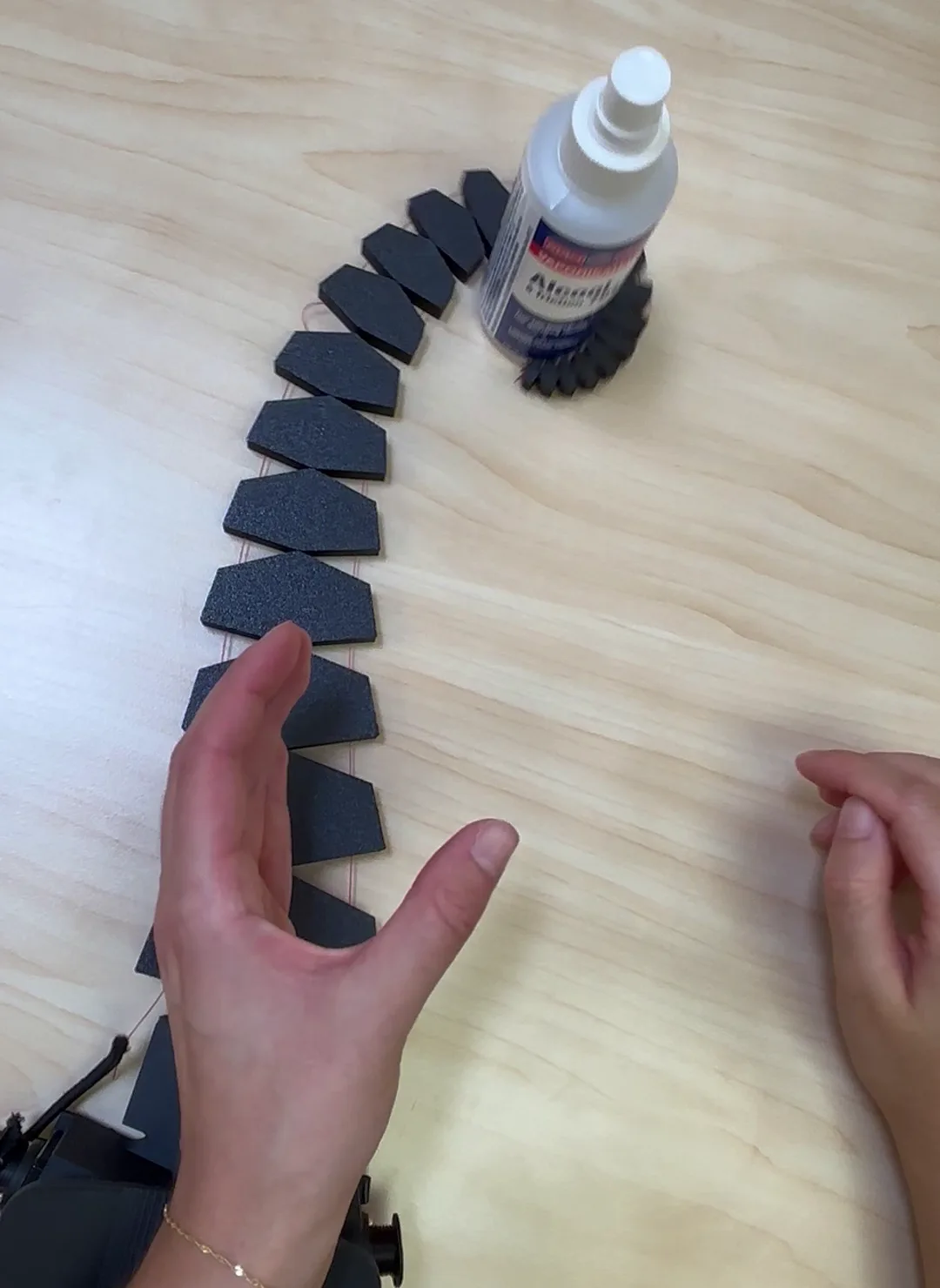
Upper-limb prostheses are essential for restoring autonomy after amputation, but many users remain dissatisfied with existing devices. One important limitation is that conventional prostheses often struggle to adapt their grasping configuration to different objects.
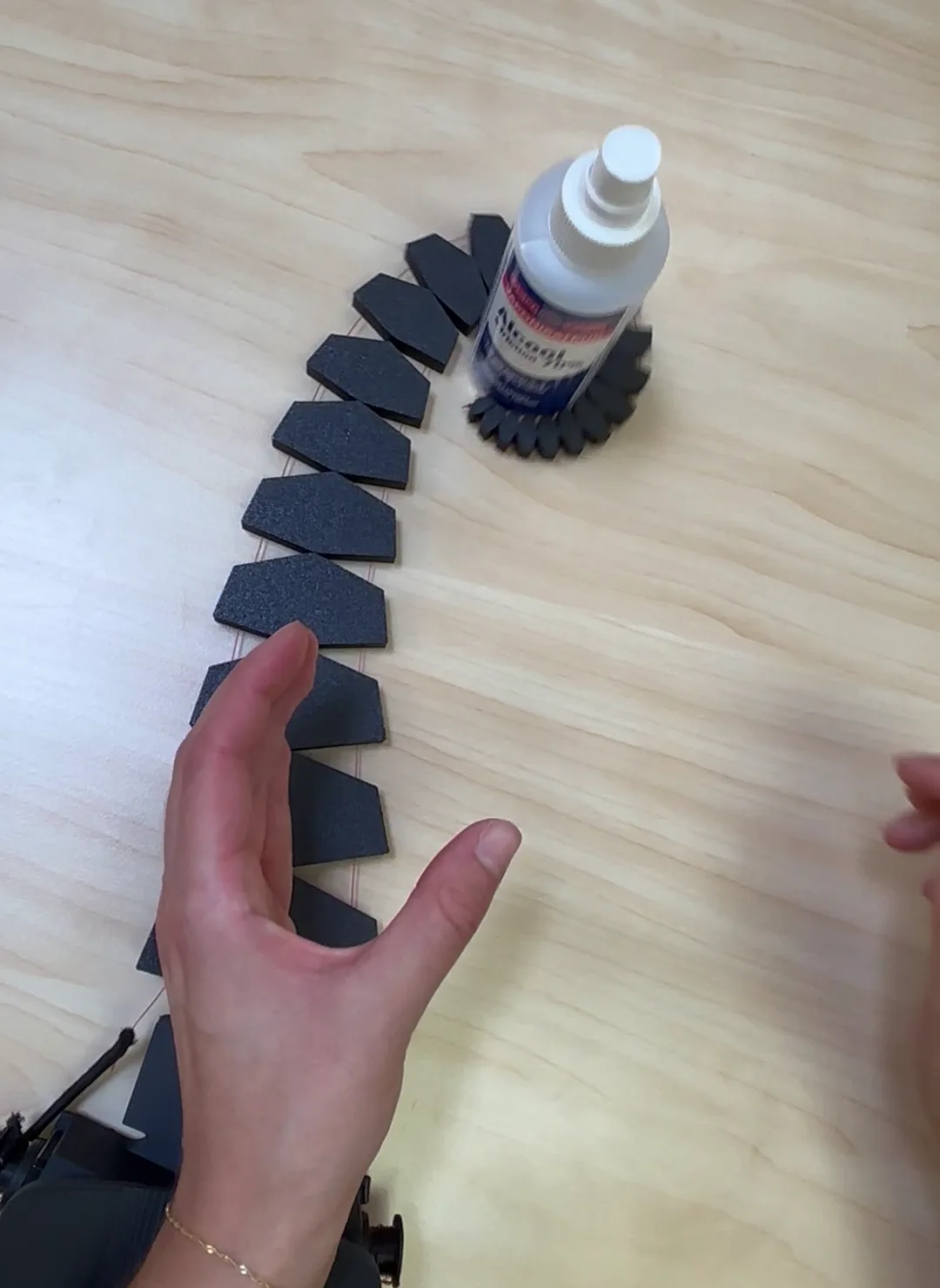
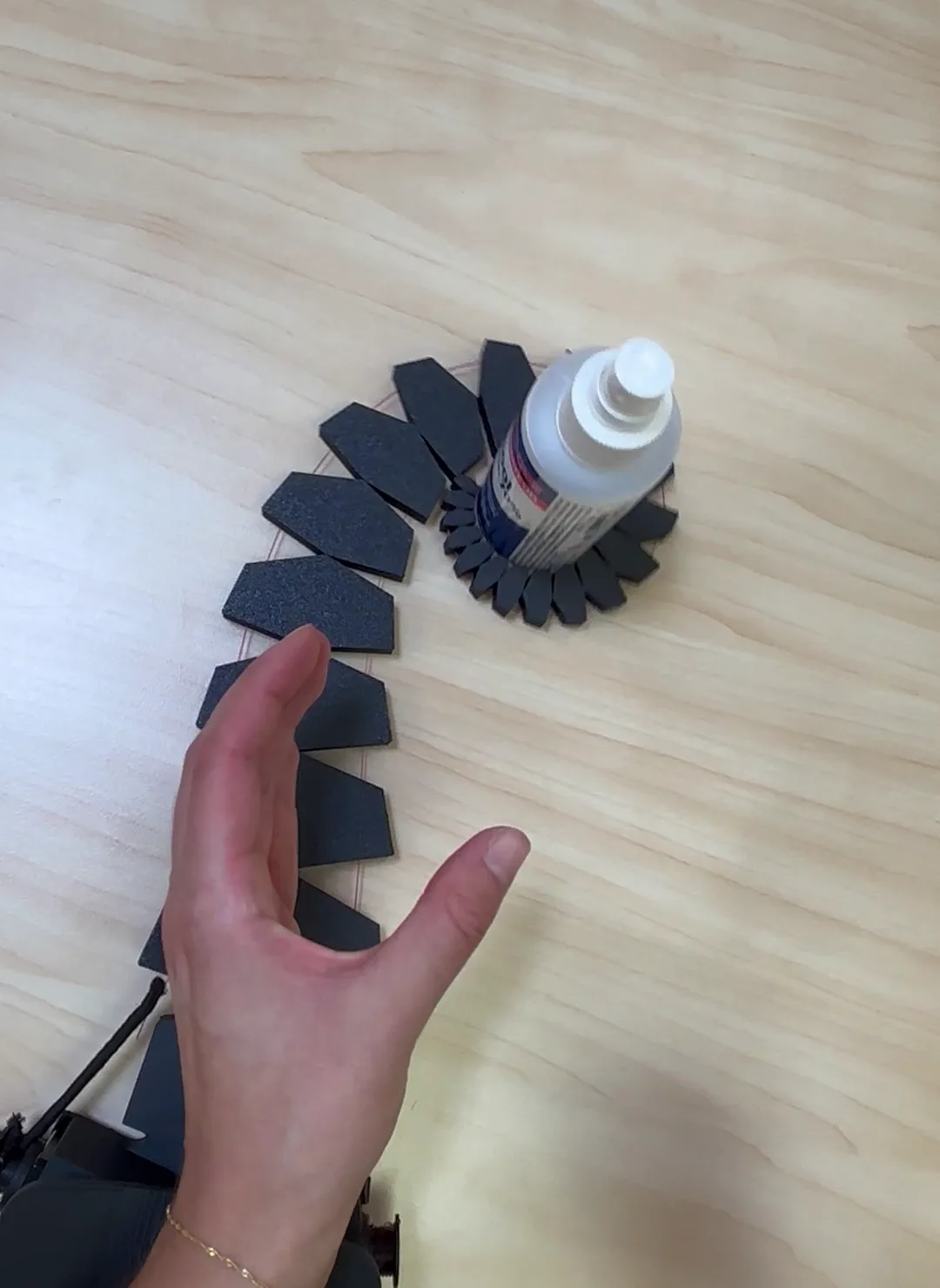
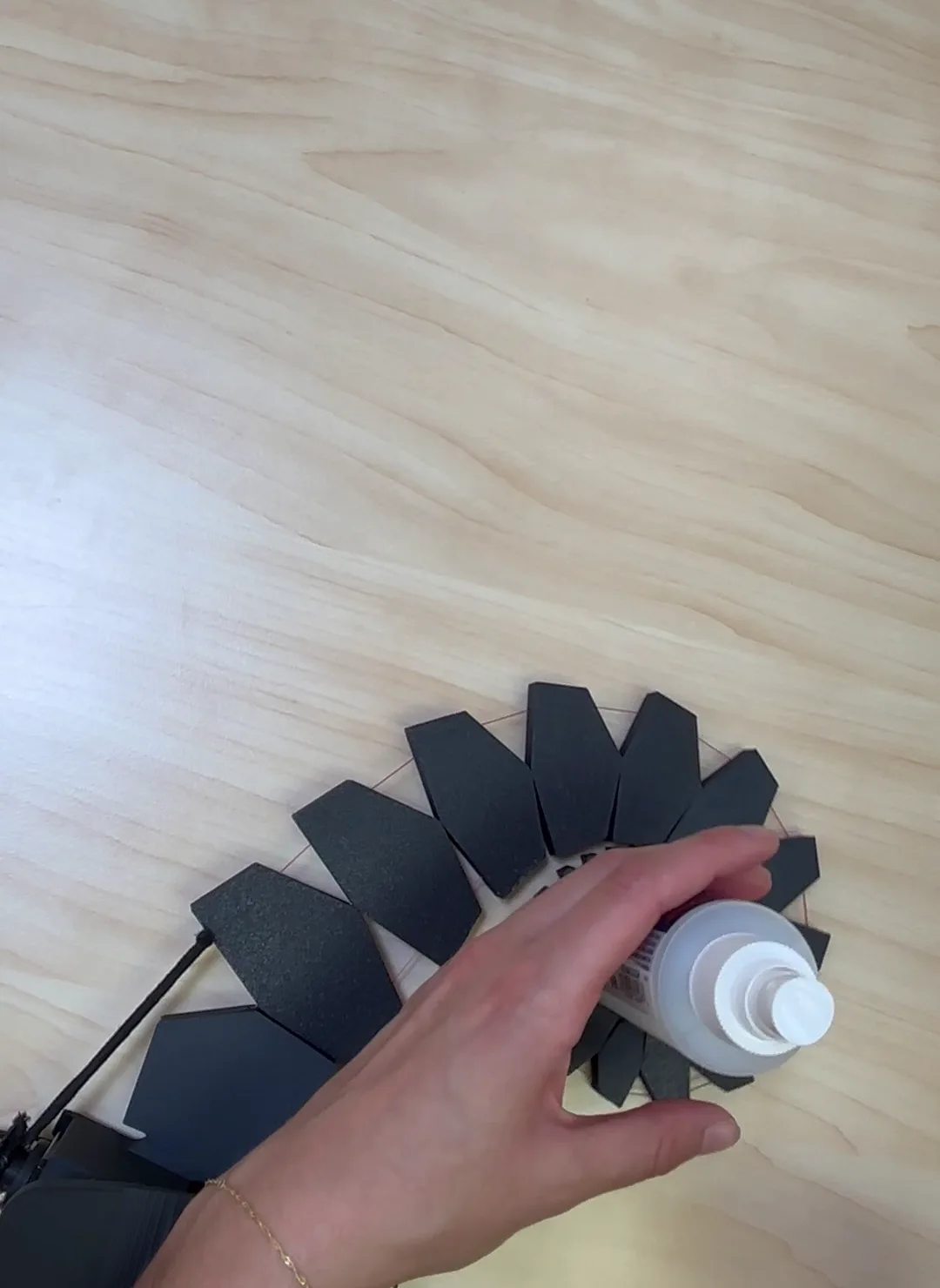
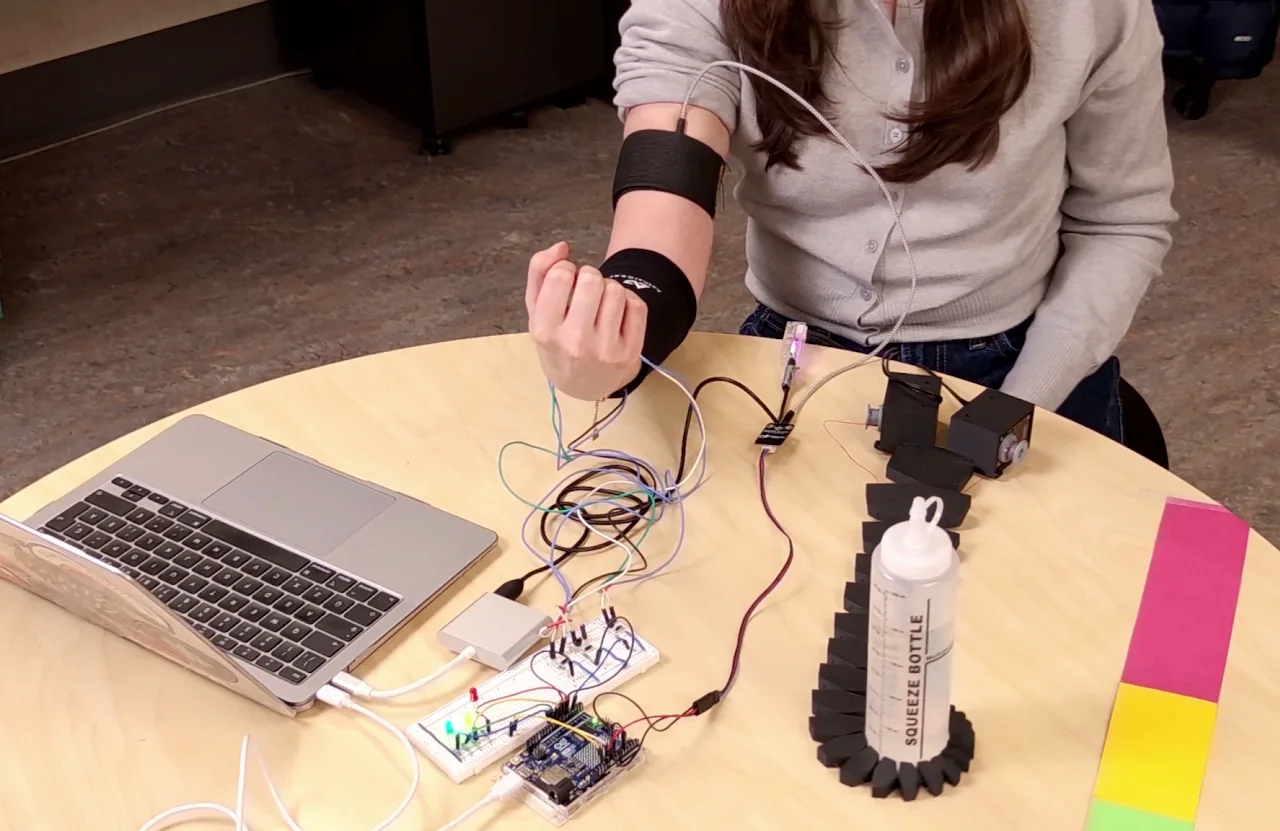
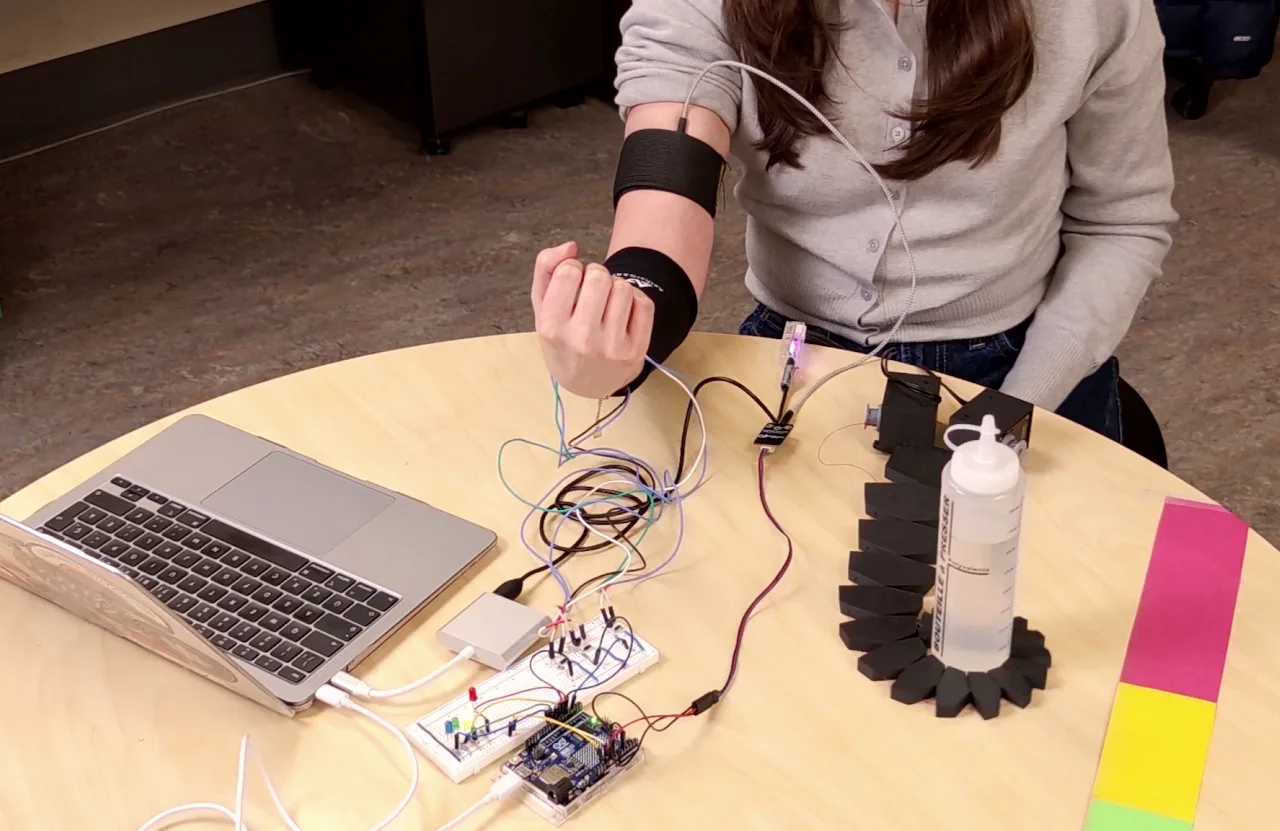
This project addresses that challenge by exploring a non-anthropomorphic design that prioritizes adaptability and functional interaction. It presents the development of a myoelectric tentacle-shaped prosthesis designed to coil around objects of different shapes and sizes. Instead of relying on fingers or a rigid gripper, the device uses a flexible segmented structure that can wrap around objects through cable-driven actuation.
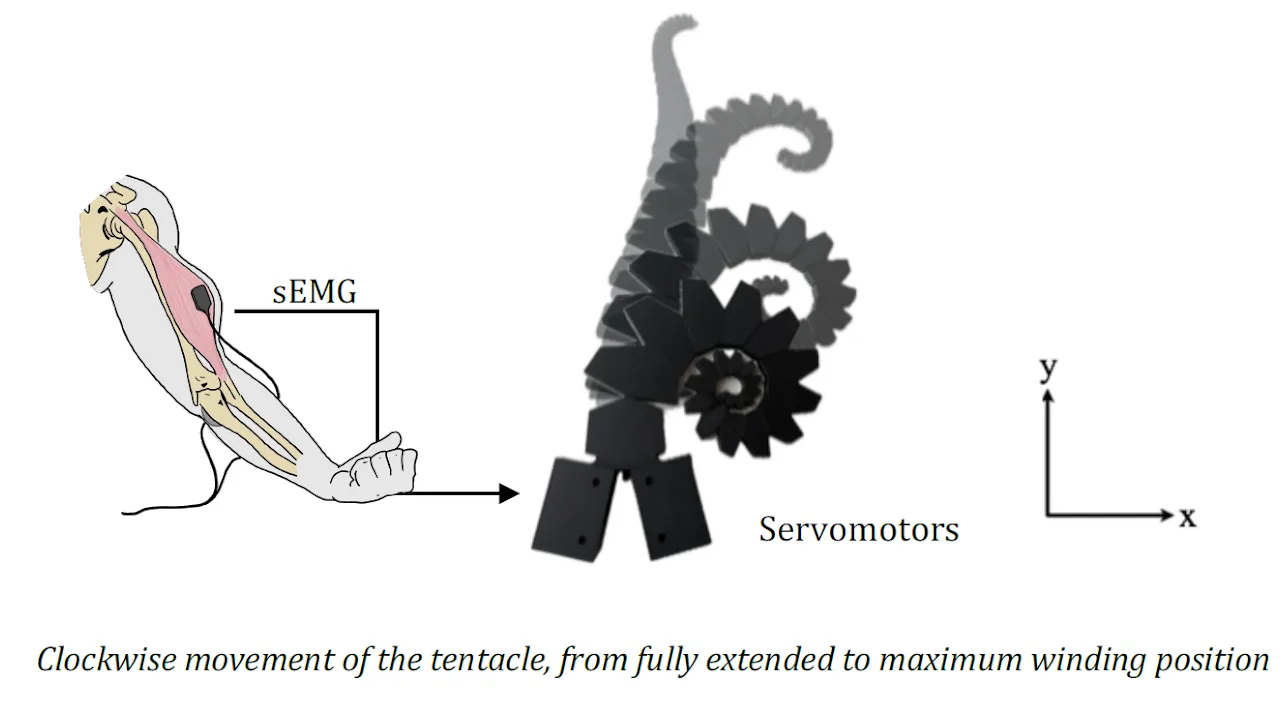
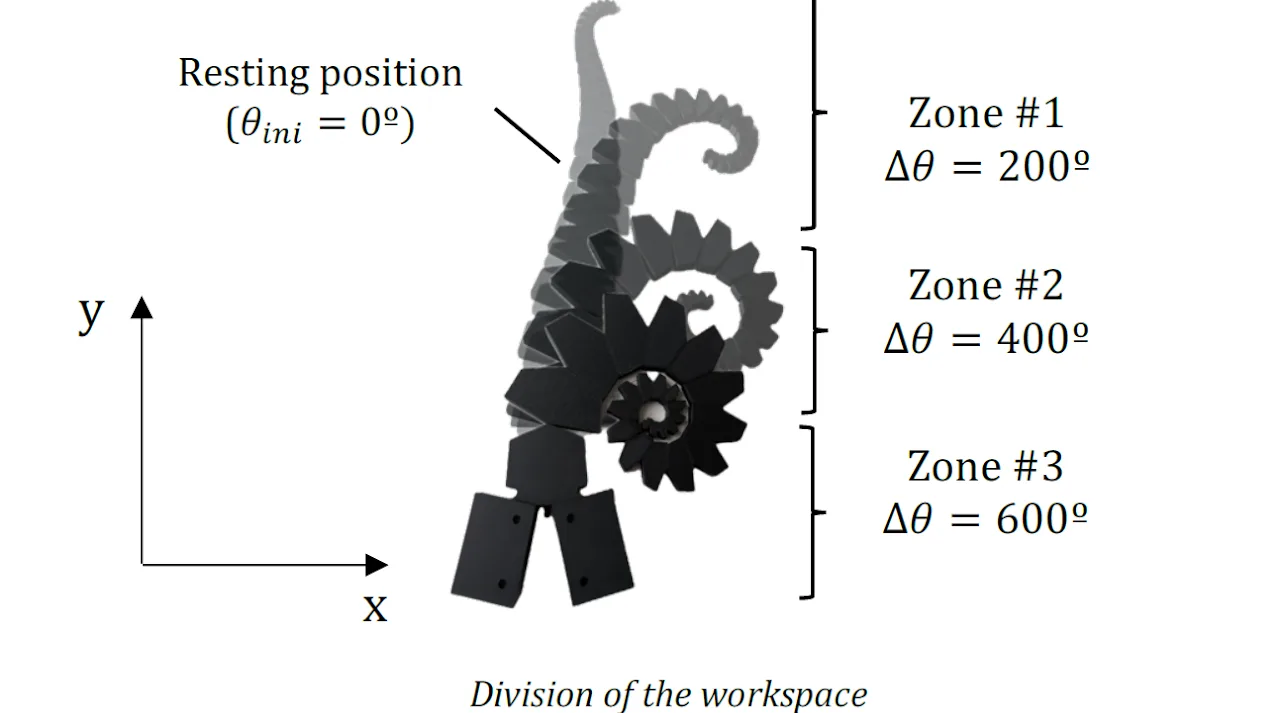
The prototype was developed as a lightweight, cable-driven structure composed of 24 3D-printed segments arranged according to a logarithmic spiral. The design was inspired by octopus tentacles, which can passively deform and wrap around objects. The geometry was based on a logarithmic spiral, allowing the device to produce a smooth and progressive curling motion. A tapered angle of 10 degrees was selected to balance compact coiling with the ability to grasp objects of different sizes. The motion is produced by two servomotors located at the base. Each motor pulls a cable routed along one side of the tentacle.
The user controls the prosthesis using muscle activation which is captured by surface EMG signals recorded from the biceps. When the activation exceeds 30 percent of the calibrated maximum voluntary contraction, the motors are commanded. A kinematic model was also developed to describe the tentacle’s motion in the XY plane. This model links cable displacement to the curvature of the structure and helps formalize how the tentacle coils during grasping.
Publications
- whitepaper
More in Wearables & Prosthetics
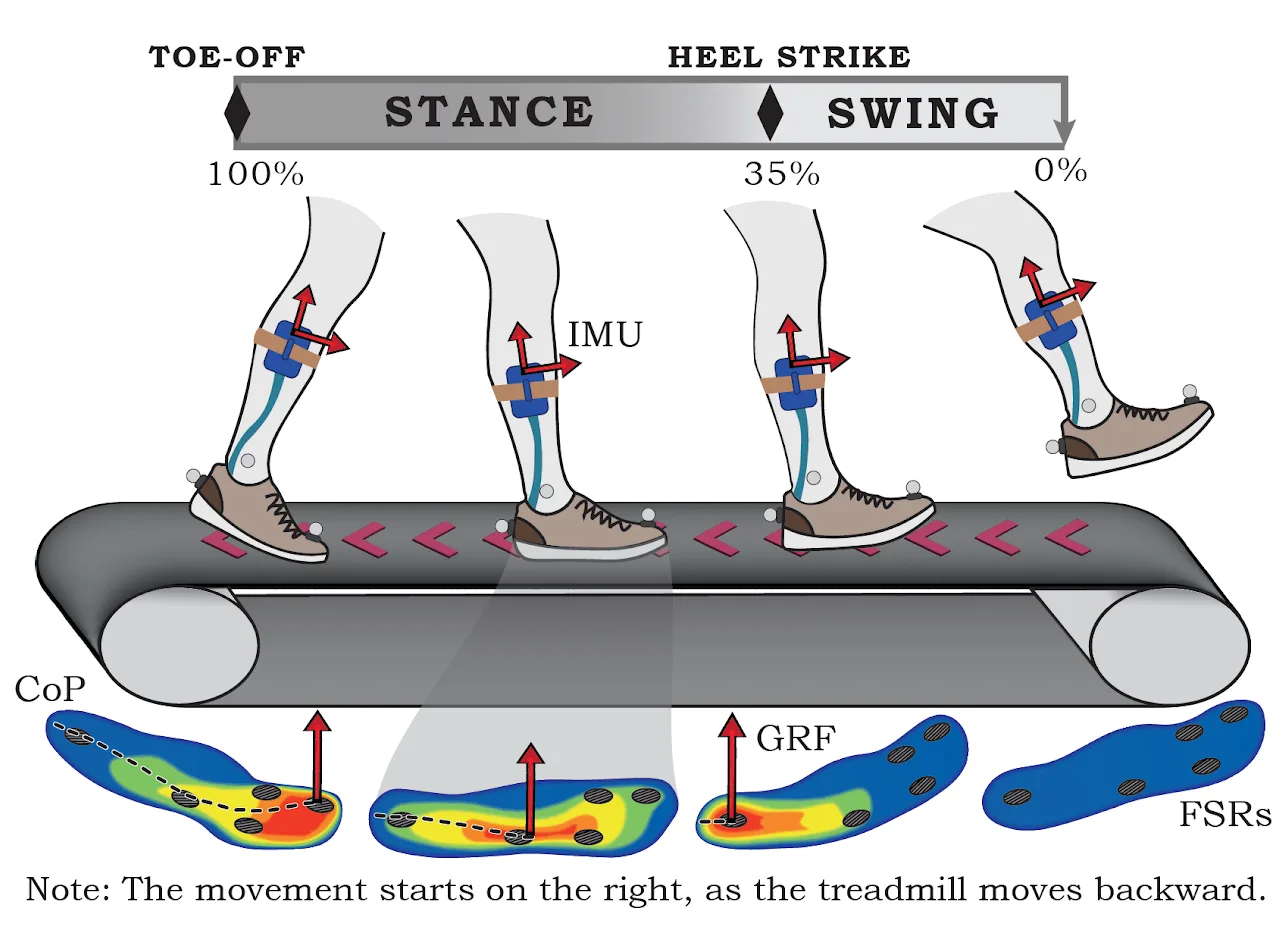 INSTRUMENTED INSOLE
 A low-cost instrumented insole that reads gait in real time to help control lower-limb exoskeletons.
View project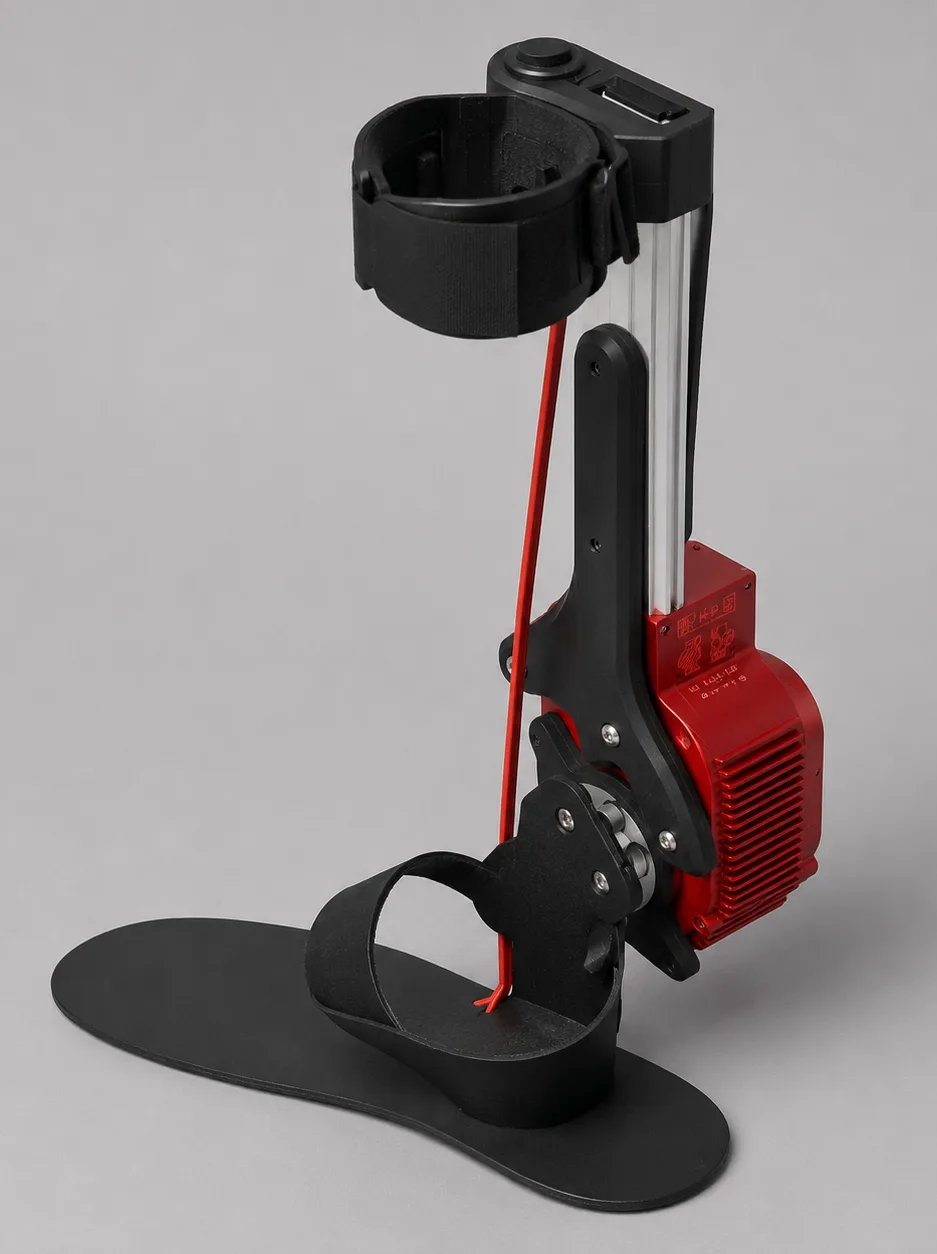 PERL
PERL A personalized ankle exoskeleton giving children with cerebral palsy adaptive gait assistance.
View project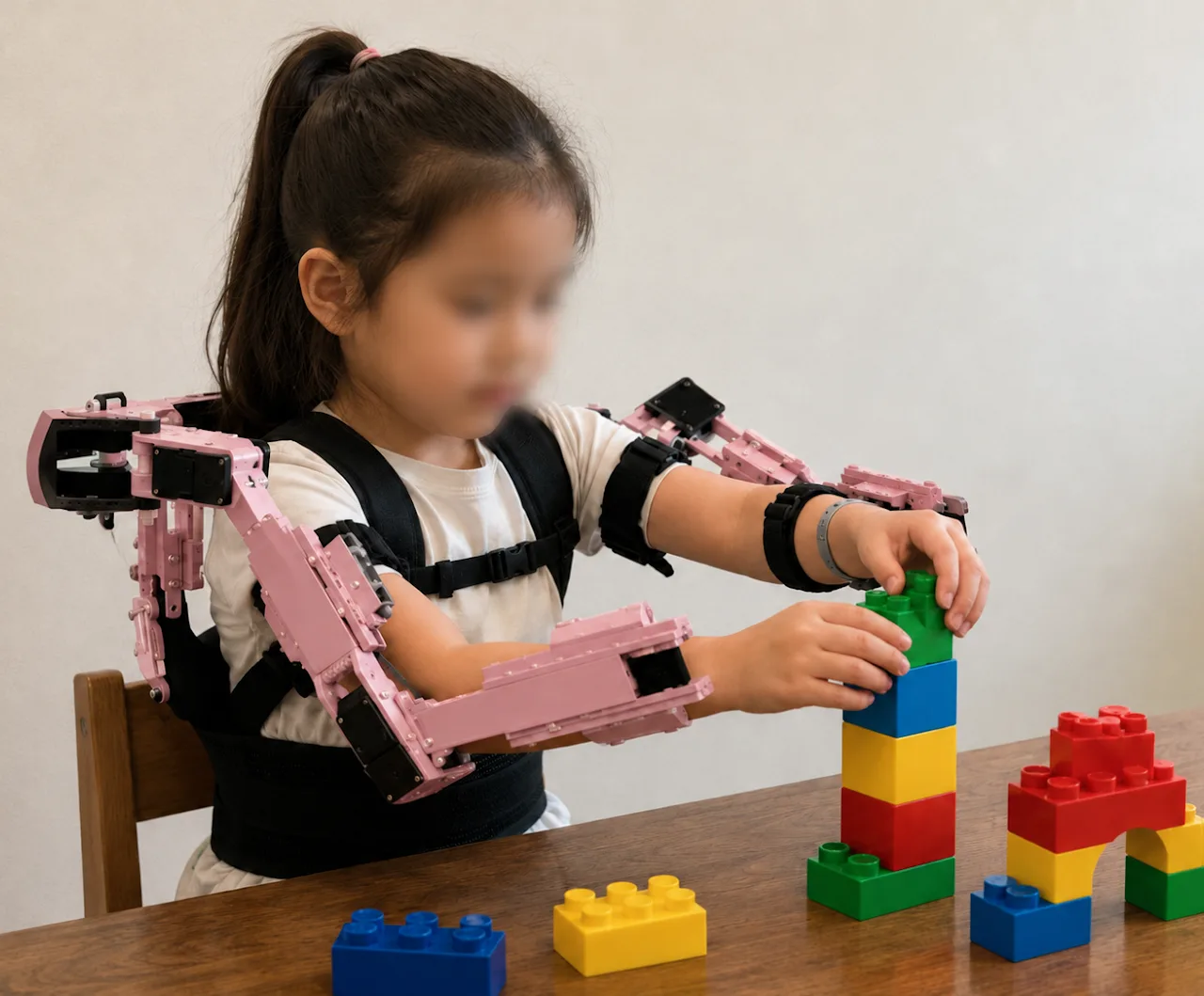 OPEN-ARMS
 An open-source, lightweight pediatric arm exoskeleton offering assist-as-needed shoulder and elbow support.
View project